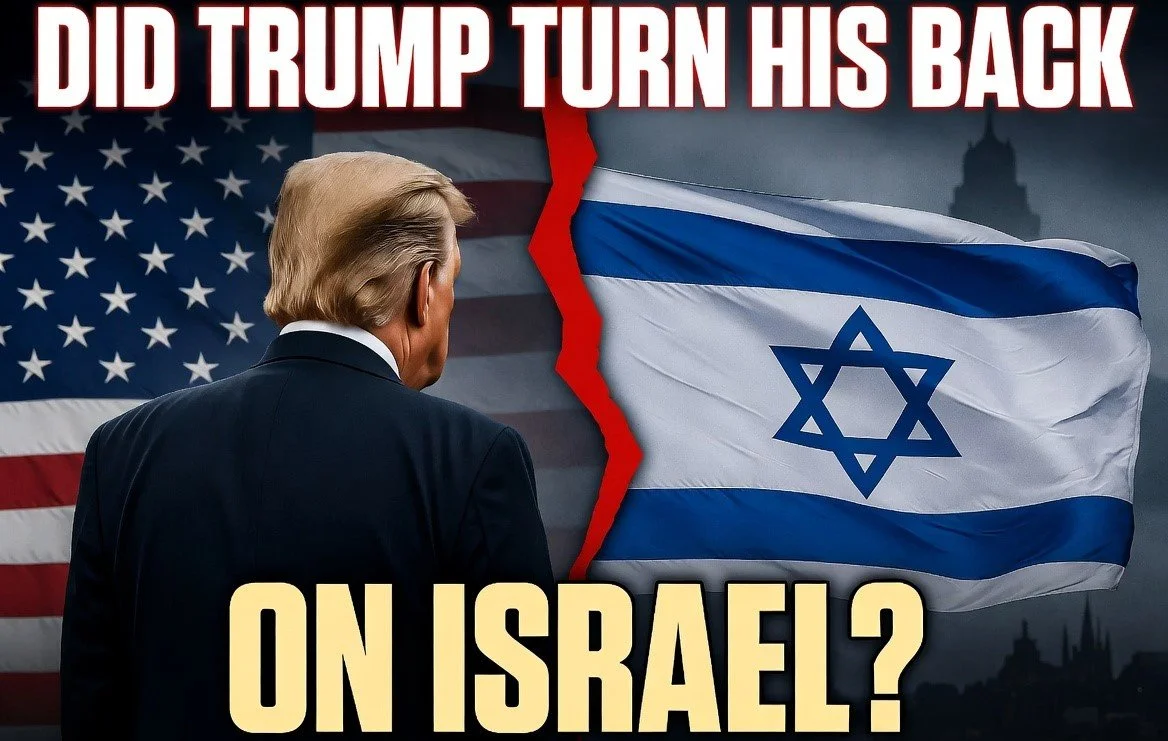
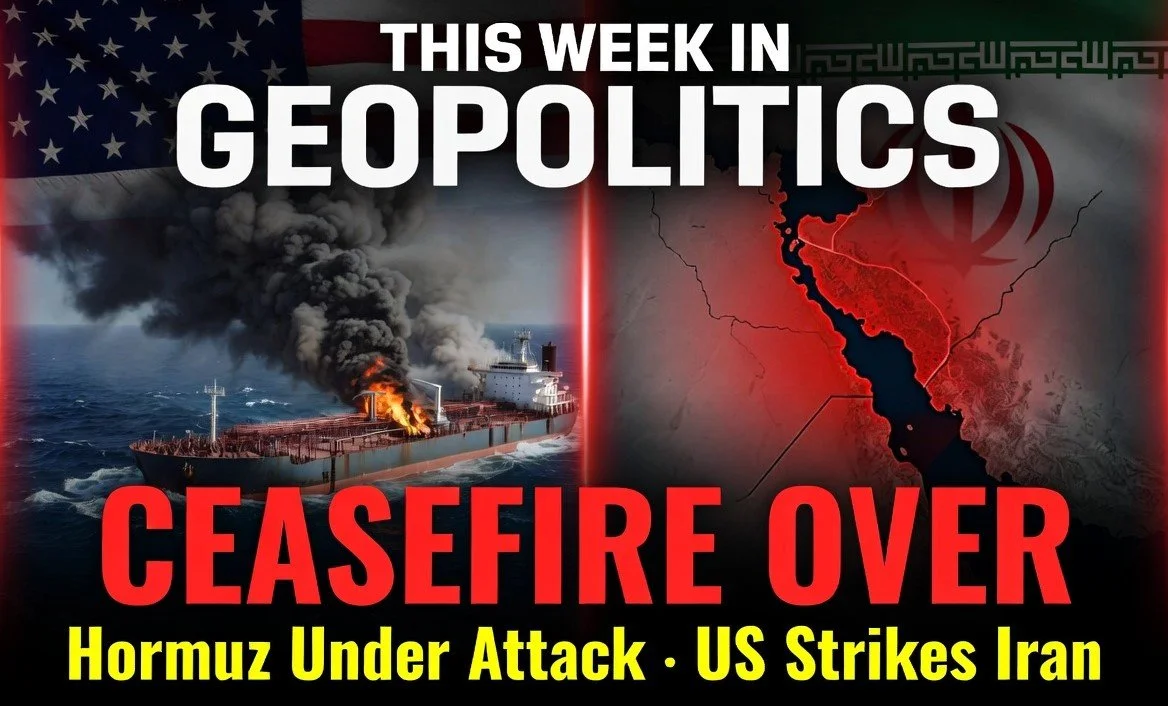
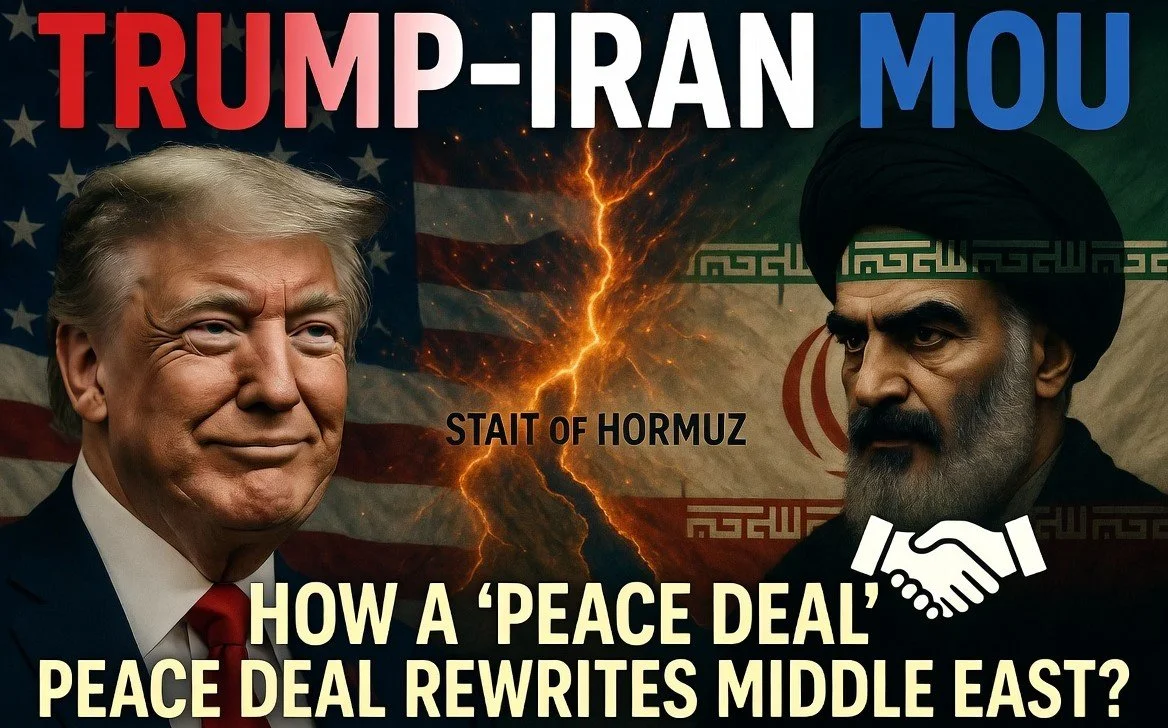
Did Trump Turn His Back On Israel?
Trump–Iran memorandum of understanding (MOU) is very likely the financial “kill switch” for Israel’s traditional strategic role, shifting the region from a U.S.–Israel–centric forever-war model to a China–GCC–Iran investment regime built around oil, LNG, reconstruction contracts, and a $300 billion regional fund.
The Iran deal might be the worst possible outcome for Israel because it removes Iran as the perpetual existential threat (“boogeyman”) that has justified decades of U.S.-funded militarization and regional war. Once sanctions relief is tied to a staged implementation of the MOU, the logic of permanent resistance and endless war gives way to a logic of long-term capital deployment: oil flows, LNG exports, and large-scale rebuild contracts administered by China and GCC states with some “bribe” participation from Western capital.
According to Simon Dixon, the widely reported “$300 billion reparations” package is better understood as an investment fund than as classic reparations. In his reading, this capital pool likely blends Chinese, Gulf, and Western financial-industrial interests, and the precise allocation of who rebuilds which assets across Iran, Israel, Lebanon, Gaza, and Gulf bases, which will reveal which power blocs have truly “won” and how the new regional order is structured. The war, in this schema, is a deliberate “destroy and rebuild” operation, where what is blown up is chosen precisely because it is slated for privatized reconstruction under the new regime.
Dixon argues that the logic of the deal is to transition the region away from a U.S.-backed military-forever-war model toward a multipolar investment order anchored by China and the GCC. Sanctions relief for Iran, the re-entry of 2–4 million barrels per day of Iranian oil, and the monetization of Iran’s large LNG reserves all become bargaining chips in a new structure where energy, tolls on strategic chokepoints, and reconstruction flows may be priced in dollars, yuan, or even Bitcoin. In this framework, the IRGC must remain intact as the domestic enforcement arm of the new order, while internal opponents are neutralized and the narrative of “resistance to the bitter end” is maintained for domestic legitimacy.
He contends that removing the perpetual nuclear and existential threat narrative fundamentally transforms Israel’s role; without a “boogeyman,” Israel’s justification as the regional frontline outpost erodes. This opens the way, in his view, for a long-term process where Israel is increasingly privatized, its assets sold off into GCC and Chinese hands, and its political structure eventually folded into a GCC-aligned security and economic architecture, potentially alongside a formal Palestinian state as part of the package demanded by Saudi Arabia as a “holdout clause.”
Dixon also insists this entire process is wrapped in layered narratives designed for different audiences: MAGA base voters who see Trump as playing “5D chess,” anti-Zionist critics who think divorcing from Israel restores American virtue, and a deeper layer in which transnational capital uses these narratives to obscure a coordinated asset-stripping and regime-transition project. In his analysis, Israel is not the apex power but rather a subordinate node within a larger transnational network of military and financial elites, and public talk of “divorce” between Washington and Tel Aviv is part of managing perception as the capital structure in the region is radically re-engineered.
The “layered psychological operation” here is basically about running different scripts for different audiences at the same time, so everyone thinks they’re winning while the same capital project quietly moves forward underneath.[wikipedia +1]
A layered psyop stacks multiple narratives vertically: one for domestic partisans, one for foreign elites, one for the “resistance” crowd, and one buried in the financial/legal architecture. Each layer is calibrated to its audience’s emotional triggers—patriotism, anti-imperialism, anti-corruption, “peace” or “stability”—so no matter your priors, there’s a version of the story that flatters you into compliance.[goarmysof.army +3]
In the Iran–Israel–GCC context, that means one storyline for MAGA voters (“we’re ditching endless wars and bad allies”), another for anti-Zionists (“the empire is finally cutting Tel Aviv loose”), another for Gulf monarchies and Beijing (“we’re formalizing your energy corridors and reconstruction rights”), and yet another, more technocratic layer in the MOU text and funds architecture that describes who actually owns what.[youtube +1]
How the layers work together
At the surface, the psyop is about emotional management: give each bloc a symbolic trophy—an apology, a “divorce,” a ceasefire, a tribunal, a “peace” framework—so they feel vindicated and stand down. Just below that, you have cognitive shaping: the constant messaging that this is about “ending forever wars,” “stability,” or “regional integration” reframes a raw asset-redistribution and control project as a moral upgrade.[swcs +3]
At the deepest layer, the real operation is encoded in timelines, sanctions relief schedules, joint funds, arbitration mechanisms, and security guarantees—things most people will never read but that determine who can pump which barrels, build which ports, securitize which cash flows, and police which borders. That’s the actual script; everything else is marketing.[resecurity +1]
Why narratives about Israel and Iran are central
The Israel–Iran storyline is weaponized as a psychological keystone: Israel’s “existential threat” from Iran justifies decades of militarization; then, selectively walking that threat back becomes the pretext for “historic” realignments and economic packages. Iran’s “resistance” image likewise serves as a domestic coping mechanism while its leadership negotiates access to capital, sanctions relief, and a managed integration into a multipolar energy and security framework.[washingtoninstitute +3]
So the layered psyop makes sure Israelis, Iranians, Americans, and Gulf publics all feel like they’re either being protected, avenged, redeemed, or compensated, while the same small circle of transnational actors quietly standardizes the region’s energy, finance, and security architecture in their favor.