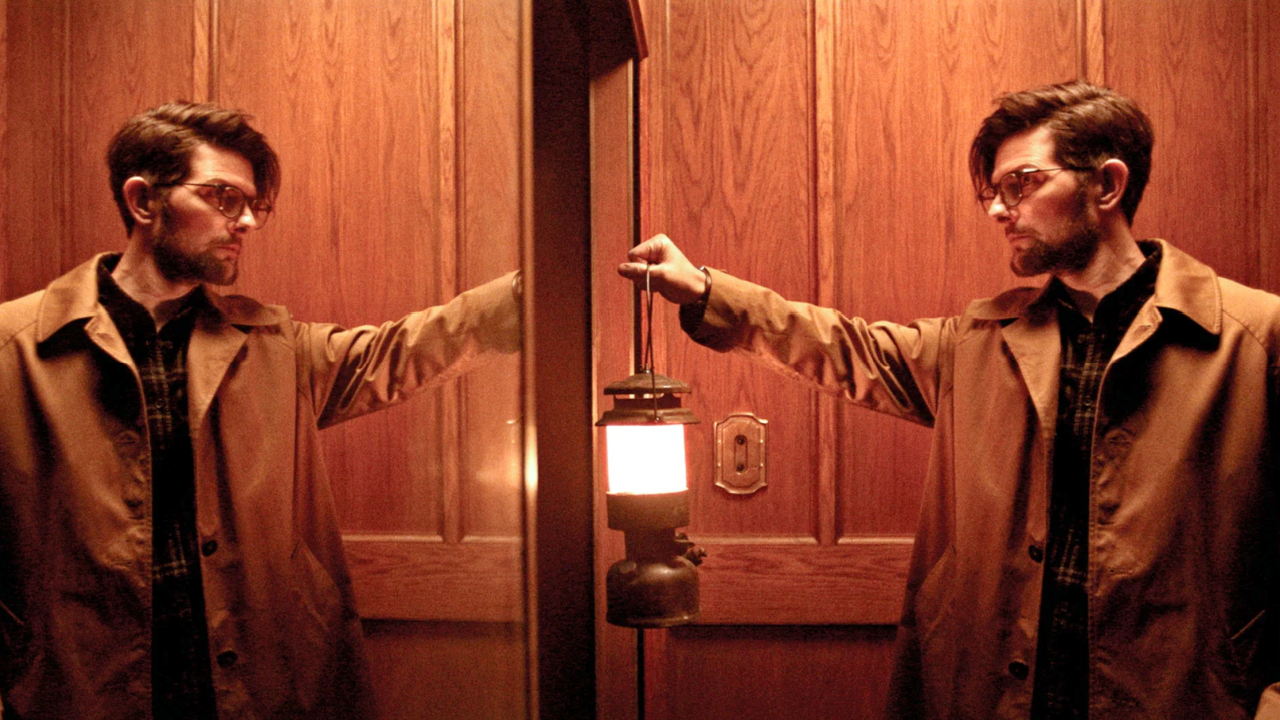
Hokum: Ghosts, Ritual and Witches
(Chaz Anon) ‘Hokum’ isn’t a horror film about ghosts in your house as much as it’s a horror film about the haunted house that’s built inside you.
On the surface, it’s boilerplate haunted‑hotel fare: remote locale, creaking wood, locked honeymoon suite, a writer with a past, a witch, and a forest that keeps forgetting to be scenic. Underneath, it’s a grief ritual dressed up as a genre picture. The scares are secondary. The real horror is the recognition that some people are already haunted long before anything supernatural arrives.
The Hotel as Psychic Pressure Chamber
The film’s great trick is that it leans on the haunted‑space cliché only to transform it into something nastier and more intimate. The hotel isn’t just a setting; it’s a pressure chamber. A sealed container where disbelief is slowly squeezed out until all that’s left is the gravitational pull of memory and guilt.
The locked honeymoon suite is the film’s most precise image, both narratively and symbolically. Locked rooms in horror are never neutral. They’re always repositories — the place where the story pretends it can keep the unspeakable folded away, like a letter that’s been shoved behind a dresser and left to fade. In Hokum, the suite feels like the literalization of repression: a sealed chamber where emotional decay has been stored until it starts leaking into the walls.
And that’s the question the film keeps circling: is the hotel haunted, or is it simply the place where one man’s self‑lie finally runs out of room to breathe?
Adam Scott as a Man Already Haunted
Adam Scott plays the kind of character who has turned cynicism into a brand and bitterness into a personality. On the surface, he’s just another unreliable narrator with a dry wit and a drinking problem. But the performance is quietly effective because it refuses melodrama. He doesn’t howl at the ghosts; he negotiates with them, like someone who’s been talking to his own demons so long he’s developed a working bargain.
The film benefits from that. Instead of a simple “writer vs. witch” showdown, we get a portrait of a man whose demons may be supernatural, psychological, or just the rounded, polished product of years of bad decisions. The ambiguity is the point. The film doesn’t want to give you a comforting answer to “Is this real?” because reality, in this universe, is exactly what’s up for grabs.
The Esoteric Layer: Descent and Initiation
Esoterically, Hokum reads less like a possession story and more like an initiation narrative gone wrong. The protagonist isn’t dragged into a ritual; he’s invited into one by the very structure of his own life. The hotel, the locked suite, the woods, the hidden passages — all of it functions as a liminal chamber, a threshold space where the dead and the living, the remembered and the repressed, are forced into contact.
The witch is the clearest sign that this is not just a haunter‑in‑the‑house premise. She operates less like a monster and more like an archetype: an ancient feminine force associated with winter, death, memory, and the violence of seasonal change. In folkloric terms, she’s not just a villain; she’s a psychopomp and a judge. She doesn’t merely threaten the protagonist; she tests him, separates him from his illusions, and drags him through a symbolic underworld so he can see what he’s pretending not to see.
In that sense, the film is closer to a dark rite of passage than a straight‑up ghost story. It’s about what happens when the unconscious stops waiting for an invitation.
Symbols, Circles, and Cycles of Guilt
The film is thick with recurring symbolic language, and it’s not playing subtle. Ash, trees, thresholds, rings, doors, and animal imagery all triangulate around cycles rather than clean endings. Ash is what remains after the thing has burned down to its core. Trees are roots and branches, ancestral continuity and the slow, vertical growth of memory. Doors and thresholds are the choice points where the self either flees or crosses.
The chalk circle is especially loaded. In occult symbolism, circles are never neutral. They mark containment, protection, and separation between worlds. A chalk circle is a demarcation drawn in something temporary and fragile — the antithesis of solidity. It says: this is where order stops, and the unknown begins. But in Hokum, order barely holds. The circle is less a barrier than a formal invitation for the outside to come in and meet the inside.
And that leads to the film’s nastiest suggestion: guilt isn’t just an emotion. It’s a summoning mechanism. The protagonist’s art, his memories, his self‑destructive habits, his refusal to integrate the past — all of it feeds the same dark current until the boundary between story, confession, and curse collapses altogether.
The Title as a Trap
The title Hokum is sly in a way that most horror films can’t afford to be. Hokum means theatrical nonsense, cheap tricks, staged illusion — the kind of thing that’s supposed to be forgettable. The film wraps itself in that label, as if to say, “Don’t take this seriously.” And then it proceeds to take everything very seriously indeed.
The bait is the genre signifiers; the bite is the confrontation with grief, inheritance, and spiritual unrest. The film weaponizes its own title, turning the idea of “just a bunch of spooky hokum” into the very mask that hides a more serious psychological and spiritual crisis.
Closing Note
At its core, Hokum is not a story about surviving a haunted hotel. It’s a story about what happens when a person refuses to bury certain parts of the past, and when the past refuses to stay buried. The supernatural elements are vivid, memorable, and genuinely unsettling — but they function as symbolic language for a deeper horror: the slow realization that the haunted thing was never the house, but the mind that’s been living inside it all along.