


Illuminati Bloodlines: The Orsini Family of Rome
(Chaz Anon) Known as the Italian Black Nobility, the Orsini family of Rome trace their bloodline to the Julio-Claudian Dynasty and is one of the most influential lineages in medieval Italy and beyond. Members of the Orsini family include three popes, 34 cardinals, numerous condottieri, and many other significant political and religious figures.
The Orsini popes in order are,
• Celestine III (1191-1198)
• Nicholas III (1277-1280)
• Benedict XIII (1724-1730)

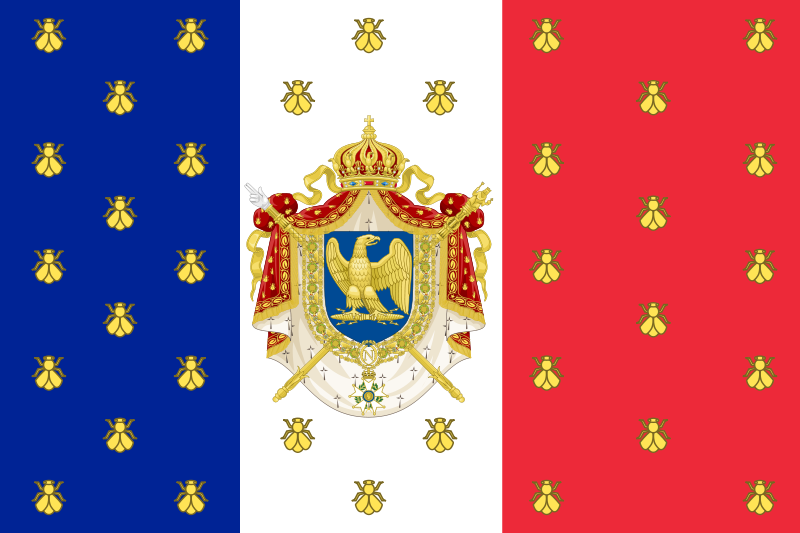
Princely arms of the Orsini Gravina line
Origin Story
The Orsini family maintained deep ties to major European dynasties, including the German houses of Anhalt, Baden, and Rosenberg, as well as the Julio-Claudian Dynasty of ancient Rome. In practice, the Orsini “family” operated less like a traditional noble house and more like a coordinated power network, comparable to a modern global cartel, but arguably far more influential.
Their rise accelerated in the 11th century through intermarriage with the Boboni family, forming the combined lineage known as Boboni-Orsini. The earliest known figure, Bobone, was the father of Pietro, who in turn fathered Giacinto dei Boboni. Giacinto would become Pope Celestine III in 1191, marking a turning point in the family’s consolidation of power.
Celestine III became known for his nepotism. He elevated two nephews to the rank of cardinal and granted his cousin Giovanni Gaetano control over key territories, including Vicovaro, Licenza, Roccagiovine, and Nettuno. These acquisitions formed the foundation of the Orsini territorial power base.
Over time, the Boboni name faded, replaced by “de domo filiorum Ursi,” meaning “of the house of the sons of the bear,” from which the Orsini identity fully emerged. Among the early figures who expanded the family’s prestige were Napoleone Orsini and Matteo Rosso, known as “the Great” (1178–1246).
Matteo Rosso became the effective ruler of Rome from 1241 to 1243 after defeating Imperial forces, holding the title of Senator. His dominance reshaped the political landscape of the city. He and his allies, including Napoleone, consolidated control while weakening their main rivals, the Colonna family.
Under Matteo’s leadership, Orsini influence expanded significantly, stretching south to Avellino and north to Pitigliano. After his death, his extensive holdings were divided among his many sons. The most prominent of them, Giovanni Gaetano Orsini, would later ascend to the papacy as Pope Nicholas III, further cementing the family’s grip on both secular and religious power.
The Second Southern Line
The rise of the Orsini did not slow after the death of Pope Nicholas III. Gentile II continued to consolidate the family’s influence, serving twice as Senator of Rome. His marriage to Clarice Ruffo, daughter of the Counts of Catanzaro, forged a powerful alliance with one of the dominant dynasties of Calabria.
His son, Romano Orsini, further expanded the family’s reach. Appointed Royal Vicar of Rome in 1326, Romano also inherited the County of Soana through his marriage to Anastasia de Montfort. Politically, he aligned with the Guelph faction, which supported papal supremacy over the authority of the Holy Roman Emperors, placing the Orsini firmly within the orbit of Vatican power.
After Romano’s death, his territories were divided between his two sons, giving rise to the Pitigliano line and a second southern branch of the family. This division did not weaken their influence but instead extended it across multiple regions.
Giacomo Orsini was elevated to cardinal by Pope Gregory XI in 1371, reinforcing the family’s presence within the Church. His brother Nicola secured the counties of Ariano and Celano, served as Senator of Rome, and continued to expand Orsini holdings throughout Lazio and Tuscany.
However, the family’s fortunes were not without disruption. Following the death of King Ladislas in 1406, the southern Orsini fiefs were confiscated, and relations with the Neapolitan crown deteriorated under Queen Joan II. This tension shifted when Giannantonio, son of Raimondello Orsini, intervened militarily to support Joan II against an attempted usurpation by James of Bourbon. In return, he was granted the Principality of Taranto, restoring and even enhancing Orsini power in southern Italy.

Pitigliano line
The Pitigliano line of the Orsini family originated with Guido Orsini, the second son of Romano, who inherited the County of Soana. From this foundation, Guido and his descendants established control over key fiefs, including Soana, Pitigliano, and Nola, forming one of the most resilient branches of the Orsini network.
However, their position was repeatedly tested. In the early 15th century, prolonged conflicts with the Republic of Siena and the rival Colonna family led to the loss of several territories. Bertoldo Orsini, who died in 1417, managed to retain only Pitigliano, marking a significant contraction of the family’s holdings.
His grandson, Orso Orsini (died July 5, 1479), rebuilt part of the family’s standing. As Count of Nola and a seasoned condottiero, he fought under major powers including the Duke of Milan and the Republic of Venice. He later entered the service of Ferdinand I of Naples. Notably, because he did not participate in the Barons’ Conspiracy, he was rewarded with the fiefs of Ascoli and Atripalda. Orso also took part in the Aragonese campaigns in Tuscany and ultimately died during the siege of Viterbo.
The most prominent figure of the Pitigliano line was Niccolò Orsini, widely regarded as one of the leading condottieri of his era. His career reflected the shifting alliances that defined Italian warfare at the time.
This pattern continued with his son Ludovico (died January 27, 1534) and his nephew Enrico (died 1528), both of whom fought in the Italian Wars under the banners of France and Spain, frequently changing allegiance in line with the pragmatic and opportunistic strategies typical of Renaissance military leaders.
The family also extended its influence through strategic marriages. Two of Ludovico’s daughters married into powerful dynasties: Geronima married Pier Luigi Farnese, the illegitimate son of Pope Paul III, while Marzia married Gian Giacomo Medici of Marignano, a prominent general in the Spanish army. These alliances reinforced the Orsini presence across both ecclesiastical and military spheres.
Despite these efforts, the line gradually declined. Ludovico lost control of Nola and was forced to accept the suzerainty of Siena over Pitigliano, signaling a reduction in autonomy. Under his son Giovan Francesco (died May 8, 1567), the county fell firmly within the sphere of influence of the Grand Duchy of Tuscany.
Later attempts to restore status proved unsuccessful. Alessandro Orsini (died February 9, 1604) sought to acquire the title of Monterotondo, but his ambitions were blocked by Pope Gregory XIII. His son, Giannantonio (March 25, 1569 to 1613), ultimately sold Pitigliano to Tuscany in exchange for the Marquisate of Monte San Savino, effectively ending the family’s independent rule in the region.
The Pitigliano line came to an end in 1640 with the death of Alessandro, closing a chapter that had spanned centuries of military ambition, political maneuvering, and gradual decline.
Monterotondo line
The Monterotondo line of the Orsini family was founded by Rinaldo Orsini, the third son of Matteo Rosso, known as “the Great.” From its inception, this branch was deeply embedded in the volatile political landscape of late medieval Rome, where noble families competed for dominance through both public office and military force.
Members of the Monterotondo line were frequent participants in the baronial struggles that defined the era. At least three were elected Senators of Rome, while others built reputations as condottieri, navigating the shifting alliances and conflicts between Italian states.
Francesco Orsini, in 1370, took part in Florence’s war against the Visconti of Milan, aligning the family with one of the major power blocs of northern Italy. Orso Orsini (died July 24, 1424) continued this martial tradition, fighting on behalf of the King of Naples. He was killed at the Battle of Zagonara while facing Milanese forces, illustrating the high-risk nature of these allegiances.
His sons, Giacomo (died 1482) and Lorenzo (died 1452), carried forward the family’s military and political involvement, serving variously the Papal States, the Kingdom of Naples, and Florence. Through Giacomo’s daughter, Clarice Orsini (1453 to July 30, 1488), the family secured one of its most significant alliances: her marriage to Lorenzo de’ Medici, ruler of Florence, linking the Orsini directly to the Medici power structure.
Ecclesiastical influence remained a parallel strategy. Franciotto Orsini was elevated to cardinal by Pope Leo X in 1517, reinforcing the family’s presence within the upper ranks of the Church.
The most prominent figure of the Monterotondo line was Giovanni Battista Orsini, who became a cardinal under Pope Sixtus IV in 1483. He is believed to have been among the conspirators in the failed plot against Cesare Borgia in 1502. The consequences were severe. In retaliation, Giovanni Battista was assassinated along with several other members of the Orsini family, marking a significant blow to their power.
From the late 16th century onward, the Monterotondo line entered a period of decline. A combination of assassinations, political setbacks, and territorial losses gradually eroded their influence, reflecting the broader weakening of the old baronial families as centralized powers began to dominate the Italian peninsula.
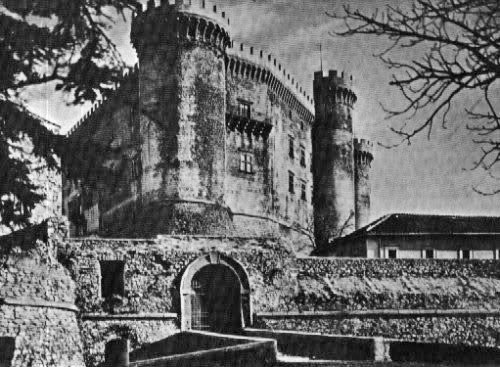
The Tower of Raimondello Orsini in Taranto, c. 1880
Bracciano line
Napoleone Orsini, another son of Matteo Rosso “the Great,” established what would become one of the most powerful branches of the family. He received Bracciano, Nerola, and other territories in what is now northern Lazio, positioning his line in a region of significant strategic value. In 1259, he served as Senator of Rome, further solidifying the family’s political authority.
Over time, the Bracciano line rose to prominence due to both geography and fortification. Their holdings occupied key routes in Lazio, and the construction of the formidable castle at Bracciano in 1426 transformed their domain into one of the strongest power centers in central Italy. At their height, this branch became the dominant Orsini line in the region.
One of its most influential figures was Gentile Virginio Orsini, a central player in late 15th-century Italian politics. Following the death of Carlo Orsini, he expanded the family’s holdings through inheritance from his wife, herself an Orsini from the Salerno branch. More importantly, he secured favor with Ferdinand I of Naples, who appointed him Great Constable of the Kingdom, one of the highest military and political offices.
Gentile Virginio, alongside his cousin Cardinal Giovanni Battista Orsini, became a leading opponent of Popes Innocent VIII and Alexander VI, placing the family in direct conflict with papal authority during a volatile period. In 1492, he further expanded his influence by purchasing the County of Anguillara from Franceschetto Cybo.
During the Italian Wars, particularly the invasion of Charles VIII of France, Gentile Virginio managed to retain control of Bracciano through calculated resistance and negotiation. However, his fortunes reversed under Ferdinand II of Naples, who confiscated his fiefs and imprisoned him in Castel dell’Ovo. In 1497, he died there, widely believed to have been poisoned.
Despite this setback, the family regained its standing under the Medici popes of the early 16th century, whose more favorable policies allowed the Orsini to recover lost influence.
The line reached its peak under Paolo Giordano Orsini, who was created the first Duke of Bracciano in 1560. A skilled condottiero, he was also known for his brutality. Most notably, he orchestrated the murder of his wife, Isabella de’ Medici, along with other acts of violence that eventually forced him to flee to northern Italy.
He was succeeded by Virginio Orsini, whose heir, Paolo Giordano II, further elevated the family’s status by marrying the Princess of Piombino and receiving the title of Prince of the Holy Roman Empire. This marked the height of the Bracciano line’s aristocratic prestige.
However, this prominence proved unsustainable. Mounting debts, combined with broader economic decline, weakened the duchy over time. The final ruler, Flavio Orsini (March 4, 1620 to April 5, 1698), was ultimately forced to sell Bracciano and its associated titles to the Odescalchi family and other buyers, bringing an end to one of the most powerful branches of the Orsini dynasty.
Gravina line
The Gravina line, named after the city of Gravina in Apulia, is the only surviving branch of the Orsini family. It descends from Francesco Orsini (died 1456), a son of Count Carlo of Bracciano. Although his early holdings were concentrated in northern Lazio, Francesco shifted into the political sphere of the Kingdom of Naples in 1418, when he was called upon by Sergianni Caracciolo to fight against Angevin forces. His successful campaign marked the beginning of the Orsini presence in southern Italy.
Through marriage, Francesco acquired the title of Count of Gravina, and his status continued to rise under the Aragonese rulers of Naples. King Alfonso elevated him to Duke of Gravina, a title that was firmly established under his son Giacomo Orsini (died 1472). Giacomo expanded the family’s southern holdings, adding the counties of Conversano, Campagna, and Copertino to their domain.
Francesco’s sons extended the family’s influence into both ecclesiastical and military spheres. Marino Orsini (died 1471) became Archbishop of Taranto, while Giovanni Battista Orsini (died June 8, 1476) rose to the powerful position of Grand Master of the Knights of Rhodes, demonstrating the family’s reach beyond Italy.
The line faced violent disruption in 1503 when the fourth Duke of Gravina, Francesco Orsini, was strangled on the orders of Cesare Borgia during his campaign to consolidate power in central Italy. Despite this, the family endured. One of his nephews, Flavio Orsini, was created cardinal in 1565, maintaining the Orsini presence within the upper ranks of the Church.
The fifth duke, Ferdinando Orsini (died December 6, 1549), experienced both loss and recovery. His fiefs were confiscated by Spanish authorities but were later restored after he paid a substantial sum of 40,000 scudi, illustrating both the vulnerability and resilience of the family’s position under foreign rule.
Following the death without heirs of Duke Michele Antonio Orsini (January 26, 1627), the Gravina estates passed to his cousin Pietro Orsini, Count of Muro Lucano (died 1641). Pietro’s nephew, Pier Francesco Orsini, initially renounced his inheritance to join the Dominican Order, allowing his brother Domenico to succeed. However, Pier Francesco later rose to the papacy as Pope Benedict XIII, once again placing the Orsini at the center of ecclesiastical power.
Under Benedict XIII, the family’s prestige reached new heights. His nephew, Prince Beroaldo Orsini, was elevated to the rank of Prince Assistant to the Papal Throne, a distinguished title held until 1958. Earlier, in 1724, Emperor Charles VI had already recognized him as a Prince of the Holy Roman Empire, reinforcing the family’s standing across both religious and imperial hierarchies.
The last cardinal of the Orsini family was Domenico Orsini, marking the end of their direct influence within the College of Cardinals.
In the 18th century, the family relocated its primary residence to Rome. Duke Domenico Orsini (November 23, 1790 to April 28, 1874) further integrated the family into modern political structures. In 1823, he married Maria Luisa Torlonia, linking the Orsini to another prominent Roman noble house. He later served as Minister of War, General Lieutenant of the Papal Armies, and Senator of Rome, demonstrating the family’s continued relevance even as the old aristocratic order evolved.
Today, descendants of the Orsini family are spread across Rome, Turin, Singapore, and the United States. In America, some branches adopted the surname “Orazine,” likely due to linguistic and bureaucratic adjustments during immigration. However, many descendants, particularly on the East Coast, have retained the original Orsini name, preserving a direct link to one of Europe’s most enduring noble lineages.

Pepe Orsini of the Roman Maximus Clan
Pepe Orsini
The name Orsini does not end in the medieval period. Pepe Orsini is the family leader today, and it’s claimed by some researchers that he occupies the role of the “Grey Pope,” a shadow authority said to operate above visible institutions and presiding over elite papal bloodlines. In this narrative, the Orsini family is portrayed as sitting at the apex of a hierarchy of influence, sometimes alleged to surpass well-known financial dynasties such as the Rothschilds and Rockefellers, while remaining aligned with other historic noble families like the Breakspear and Aldobrandini.
Within this framework, the concept of the “Grey Pope” is often paired with that of the “Black Pope,” a term historically used to describe the Superior General of the Jesuit order. These narratives suggest a concealed structure of power operating behind formal religions. The implication is that real continuity of power does not lie in elected offices or public institutions, but in inherited bloodlines and tightly controlled alliances.
In this view, families such as the Rothschilds and Rockefellers are not dismissed, but repositioned. They are seen as powerful financial actors operating within a broader system, while older European lineages like the Orsini, Aldobrandini, and Breakspear are framed as custodians of a deeper, more enduring form of influence tied to the Church, nobility, occult traditions and long-term geopolitical strategy.
Claims surrounding figures like “Pepe Orsini” often extend further into allegations of coordinated global agendas, including population control and centralized governance. These ideas reflect recurring themes where elite continuity, secrecy, and multigenerational planning are emphasized as the true drivers of world events.
Therefore, if this narrative is true, Pepe Orsini sits at the apex of the ancient Maximus clan—the most formidable Roman Papal Bloodline. His lineage represents unyielding power within this cabal.
Saturnalian Brotherhood – The 13 Bloodlines of the Illuminati
• House of Borja
• House of Breakspeare
• House of Somaglia
• House of Orsini
• House of Conti
• House of Chigi
• House of Colonna
• House of Farnese
• House of Medici
• House of Gaetani
• House of Pamphili
• House of Este
• House of Aldobrandini
Author and researcher Fritz Springmeier traces this structure back to the Ptolemaic Dynasty of ancient Egypt, which he claims has maintained its grip on global affairs through various fronts. The Company of Jesus (Jesuits) is one such entity—founded by Ignatius Loyola in 1540 under papal charter but allegedly controlled by these Egyptian bloodlines. The High Grey Council of Ten is another layer, overseeing both political and occult operations.
The Black Pope operates within a legal framework that blends Vatican Canon Law with Roman Imperial traditions, now codified under International Maritime Admiralty Law (Uniform Commercial Code). This system allows for corporate control over nations and individuals alike. His alliances include powerful papal families like Orsini, Breakspear, Aldobrandini, Farnese—all linked to centuries-old conspiracies.
Notably, Springmeier identifies Zoroastrianism and Mithraism as key mystery schools protected by Jesuit machinations. These ancient cults emphasize dualism and ritual sacrifice—elements reflected in modern geopolitical conflicts orchestrated by their descendants.
The Borgia crime family played a pivotal role in shaping early Jesuit ideology into a quasi-religious strike force loyal only to their Spanish masters. Don Francis Borgia—a great-grandson of Pope Alexander VI—co-founded the order alongside Loyola. This lineage ties directly into royal bloodlines like Ferdinand II of Aragon.
In essence, Springmeier paints a picture where seemingly religious institutions serve as fronts for dynastic control mechanisms rooted in antiquity. The Black Pope stands at this nexus—a military commander cloaked in clerical robes who manipulates world events from behind Loyola University's "military fortress" walls within Washington D.C., itself an unratified corporate entity under Vatican law.
Powerful American families want to inter-marry with these bloodlines, with the likes of David Rothschild marrying into the Aldobrandini family when he married Princess Olimpia Aldobrandini.

Olimpia Borghese Aldobrandini (left) and Baron David Rothschild (right) at their wedding
The British royal family, specifically Queen Elizabeth II and her late husband Prince Philip, operate under the direct subjugation of the Breakspear family—a powerful Papal Bloodline. The Breakspears serve as the linchpin for Jesuit control in the United Kingdom, with their strategic headquarters located at 114 Mount Street. This Jesuit stronghold orchestrates global domination through its network of Knights of Malta and Teutonic Knights, all shielded within the heavily fortified Borgo Santo Spirito complex in Rome.
Historical records reveal that Elizabeth I received substantial funding from Pallavicini to wage war against Spain, demonstrating early ties between European monarchies and these shadowy bloodlines. However, their influence extends far beyond Europe. Henry Breakspear, a key figurehead residing in Macau, China, exemplifies how Papal Bloodlines have infiltrated Asia and India—regions critical to their unfolding agenda.
Meanwhile, China emerges as "the Great Red Dragon," symbolizing Satanic/Saturnian forces poised to dominate globally. This intricate web of elite families weaves together European nobility with Asian dynasties under Jesuit command.
The Great Red Dragon
The biblical narrative in Revelation 12 vividly portrays a dualistic struggle between divine and satanic forces. Verse 3 introduces the "great red dragon" with seven heads, ten horns, and seven crowns—a symbol of immense power and authority. This creature is later identified in verse 9 as none other than Satan, the deceiver of the world, who was cast down to Earth along with his angelic followers.

The imagery of the red dragon has profound implications when considered alongside contemporary geopolitical developments. The dragon's role as a source of power for initiates aligns with esoteric traditions where adepts seek to tap into occult energies—often referred to as "satanic" or "draconian." The historical symbiosis between ancient Rome (with its imperial ambitions) and such mystical forces finds a modern analogue in the partnership between China (the Dragon Nation) and certain Papal Bloodlines.
China's rapid ascension as a global hegemon, coupled with its overt embrace of technocratic surveillance states and transhumanist ideologies, eerily mirrors the prophetic description of a New World Order (NWO) system empowered by satanic energy. The collusion between Chinese authoritarianism and elite Catholic families—many tracing their lineage back to medieval nobility—suggests an unfolding drama where East meets West under the banner of draconian control.
This convergence is not merely speculative; it is observable in current events. From China's Belt and Road Initiative reshaping Eurasia according to Beijing's design to Vatican City signing historic agreements with communist regimes, we witness tangible manifestations of this alliance. The fusion of Confucian legalism with Jesuitical pragmatism creates a potent brew that threatens traditional liberties worldwide.
In essence, Revelation 12 offers more than apocalyptic symbolism—it provides a framework for understanding our present predicament. As global powers coalesce around ideologies hostile to individual sovereignty and divine order, believers are called to discern these spiritual machinations lest they unwittingly serve the very dragon they were meant to resist.
The Sun of God
Zion – Sion – Sun
The nation of Israel plays a pivotal role in the Illuminati, with bloodlines tracing back to powerful families in ancient times. "Zion" refers to both the nation of Israel (Isis-Ra-El) and Jerusalem specifically. Meanwhile, "Sion" denotes a hill in Judea upon which Jerusalem is built, symbolizing proximity to their god due to its elevation toward the sun—a deity they worship. The terms "Zion" and "Sion" literally mean "Sun" or "Son," suggesting that Zionism could be interpreted as sun worship, a cult rooted in Babylonian traditions.
This connection is reinforced by secret societies like the Priory of Sion (meaning "Priory of the Sun"), which has gained notoriety following the Rennes-le-Château mystery. The Priory centers around the Merovingian bloodline—purportedly descending from Sumerian royals, Trojans, and Greek gods—and maintains ties with both Templars and Illuminati.
Historically, the Knights Templar were exiled by Pope Clement V and Philip IV of France in 1312. Survivors fled to Aragon, evolving into the Order of Calatrava before aligning with Montessa. In 1534, Ignatius Loyola—a Templar member of Alumbrados—revived them as the Society of Jesus (Jesuits). Notably, Francis Borgia, co-founder and third Superior General, hailed from the infamous Black Nobility's Borgia lineage under Orsini control.
Thus emerges a complex web where Zionist ideology may veil solar deification within ancient cultic practices now embedded in modern power structures through Jesuit-Templar continuities.
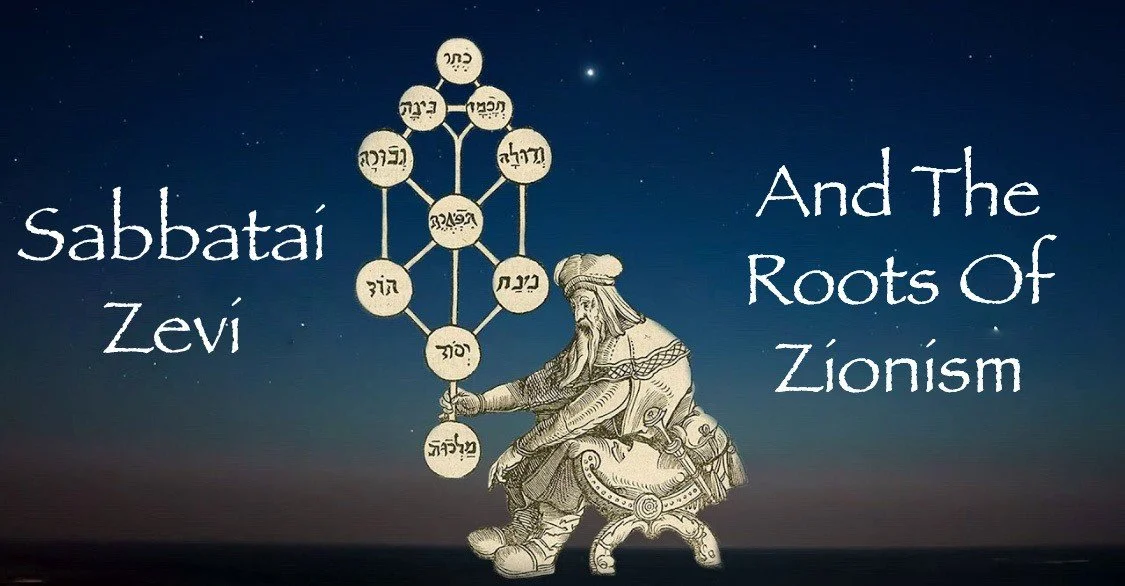
Sabbatai Zevi and the Roots of Zionism
The Vatican
The etymology of "Vatican" reveals a fascinating connection to prophecy. The term "Vaticanus" can be dissected into two Latin components: "vatic," meaning prophetic or related to fortune-telling, and "anus," signifying a hill or mountain. This breakdown mirrors the construction of other Latin place names, such as "Romanus," which combines "Rome" with the suffix "-anus." Therefore, when referring to the Vatican Hill (Vaticanus Collis) or Vatican Mountain (Vaticanus Mons), one is literally describing a site associated with prophetic activities—a hill or mountain of prophecy.
This interpretation aligns with historical evidence. A recent Catholic publication clarifies that the word "Vatican" originates from the Latin term *vates*, which translates to "tellers of the future." The area known as Vatican Hill was so named because it served as a marketplace for fortunetellers who would peddle their services to passersby along the Tiber River. Only later, in the 14th century following the papacy's return from Avignon, did this location become synonymous with the seat of Roman Catholic power.
In essence, both linguistic analysis and historical documentation confirm that the name "Vatican" carries inherent connotations of divination and clairvoyance—activities long frowned upon by traditional Christian teachings. The irony lies in how an institution ostensibly founded on religious principles came to occupy a site historically linked with occult practices.
Illuminati Hierarchy
The Orsini family, specifically the Maximus/Orso lineage, is deeply entrenched in the shadow hierarchy of the Jesuit Order. It is said that their roots in Zoroastrianism—a dualistic religion emphasizing eternal struggle between good and evil—inform their role within “Beast" system.
In "Bloodlines of the Illuminati," author Fritz Springmeier delves into the Orsini family's pivotal role within occult hierarchies, particularly their ties to the Jesuit Order, Zoroastrianism and ancient Egyptian mystery schools. According to Springmeier, the Orsini family are one of the 13 core bloodlines that control world events through secret societies and financial networks.
He suggests the Orsinis' connection to Zoroastrianism is crucial. This ancient Persian religion, founded by Zarathustra (Zoroaster), emphasizes dualism—the eternal struggle between good (Ahura Mazda) and evil (Angra Mainyu). Springmeier suggests that this dualistic worldview influences how elite families like the Orsinis navigate power: they often play both sides against each other to maintain control.
Their relationship with the Jesuit Order is equally significant. The Jesuits, founded by Ignatius Loyola in 1540, have long been accused of infiltrating governments and institutions under the guise of Catholic piety. Springmeier posits that certain Jesuit factions secretly adhere to Gnostic or Luciferian principles rather than traditional Christianity. The Orsinis' involvement here implies they bridge these mystical currents with practical political power.
Springmeier also notes historical figures like Lorenzo de' Medici ("Lorenzo the Magnificent"), who allegedly practiced Zoroastrian rituals alongside Christian observances. Such syncretism—blending different religious traditions—is common among elite bloodlines seeking esoteric knowledge beyond mainstream faiths.
Ultimately, "Bloodlines" presents a complex web where ancient cult practices inform modern global governance. The Orsini family's position at this nexus—combining Jesuit influence with Zoroastrian mysticism—suggests they wield significant behind-the-scenes authority over Western power structures.
According to Springmeier, The Beast system is not a monolith but a hydra-like entity with six distinct heads, each representing a different facet of occult power. The Illuminati is merely one such head, while the true apex of this structure is believed to be controlled by a mysterious woman known as Queen Hephzibah.
Hephzibah's significance lies in her alleged reincarnation of Semiramis—the ancient Assyrian queen deified as Ishtar—who represents feminine power twisted into malevolent dominance. Her ability to "ride the beast" symbolizes control over the chaotic forces unleashed by these six heads. The Orsini family's position within this network suggests they act as key intermediaries between Jesuit authority and deeper occult practices tied to Babylonian mysticism.
This structure implies that visible institutions like governments or churches are mere puppets manipulated by unseen hands—hands guided by esoteric knowledge tracing back to pre-Christian civilizations. The concept of Hephzibah riding the beast echoes apocalyptic imagery from Revelation, where a harlot sits atop a seven-headed dragon, symbolizing corrupt religious power merged with secular might.
Understanding this requires peeling away layers: beneath overt political structures lies an older web of mystical allegiances and bloodline dynasties like the Orsinis. Their Zoroastrian heritage hints at an ancient split between light and darkness now playing out through modern institutions—where outward piety masks inner allegiance to dark deities like Semiramis' legacy embodied in Hephzibah.
The figure of Queen Hephzibah operates entirely beyond the purview of mainstream outlets like The Economist or The New York Times. Her existence is shrouded in esoteric lore, suggesting she is not merely a human matriarch but a Nephilim hybrid—descended from fallen angels and thus carrying divine yet corrupted bloodlines. Some traditions even posit her as the great-granddaughter of Lucifer himself, making her lineage both royal and infernal.
Her role as the Mother of the Anti-Christ places her at the apex of apocalyptic narratives, where religious prophecy meets occult power structures. This position grants her dominion over various hierarchies, including Jesuit orders and shadow governments. The Pindar—a term referring to high-level initiates within secret societies—along with other powerful figures, allegedly tremble at her authority.
The dichotomy between Outer Doctrine and Inner Doctrine explains why such figures remain invisible to public discourse. Outer Doctrine refers to the sanitized narrative fed to non-initiates—the surface-level truths that maintain social order without revealing deeper realities. In contrast, Inner Doctrine encompasses forbidden knowledge reserved for those who have undergone initiation rituals into secret societies or mystical orders. Only they are privy to the true nature of this reality paradigm—where mythological beings like Nephilim hybrids shape world events from behind veils of secrecy.
This setup mirrors ancient cults where priestly castes controlled access to sacred texts and mysteries while presenting a more palatable mythology to commoners. In modern times, this translates into compartmentalized information flows: one set for mass consumption (Outer), another for elite understanding (Inner).
Conclusion
The Orsini bloodline represents a continuous thread of power from medieval Rome through modern times, weaving together papal manipulation, Black Nobility exclusivity, Illuminist infiltration, and occult symbolism.


